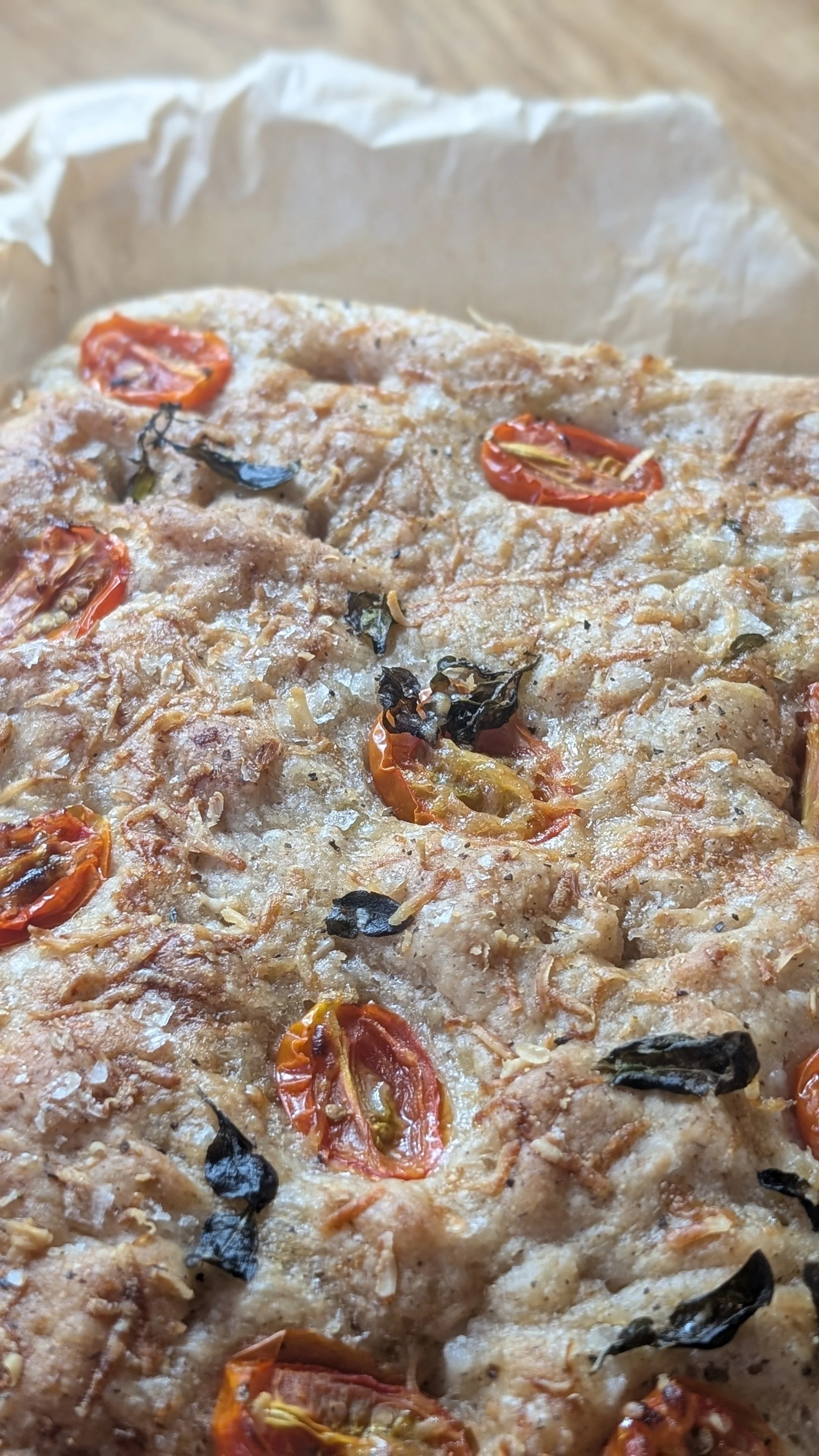
Gluten Free Tomato Focaccia
🌿 Hello, lovelies and welcome back
to the Recipe Club!
✨ My goal with any gluten free/vegan bakes is to make them taste like they aren’t - like people without allergies couldn’t tell the difference, and this recipe is always a big hit! It has a beautiful crunchy crust, then the bread underneath is so chewy and flavourful - I can’t wait for you guys to love it as much as we do!
Ingredients
🍞Focaccia
18 psyllium husk powder
560g warm water (between 48-55°C)
150g cornflour
1tsp dried basil
20g granulated sugar
20g fresh yeast OR 10g instant yeast
10g fine sea salt
15g extra virgin olive oil
🍅 Toppings
40g extra virgin olive oil
10 baby plum tomatoes, halved
20 basil leaves
2tsp Maldon sea salt flakes
30g parmesan cheese, grated
👩🍳 First Things First: Mis en place
A French term for everything in its place - in other words, organise all of your ingredients to ensure an efficient process while we cook something delicious!
👩🍳 Let’s cook!
I make this recipe using my stand mixer with a dough hook attachment, although you can make it by hand if you prefer, it will just take a little longer!
2. Begin by making the psyllium gel. In a small bowl, stir together the psyllium husk and lukewarm water. After about 30–45 seconds, it will thicken into a gel that we will use1!
3. In a large bowl, or the bowl of your stand mixer, whisk together the rice flour, cornflour, buckwheat flour, tomato powder, dried basil, sugar, yeast and salt.
4. Stir the olive oil into the psyllium gel until well combined. Make a well in the middle of the dry ingredients and add the psyllium mixture. Knead the dough until everything comes together into a smooth, evenly mixed dough, scraping down the sides and bottom of the bowl as needed to make sure there are no dry patches, or residue on the sides of the bowl, the dough should feel smooth, soft, and fairly sticky, with no lumps of flour or psyllium gel. Try not to add extra flour, even if it’s tempting, as that can make the focaccia dry.
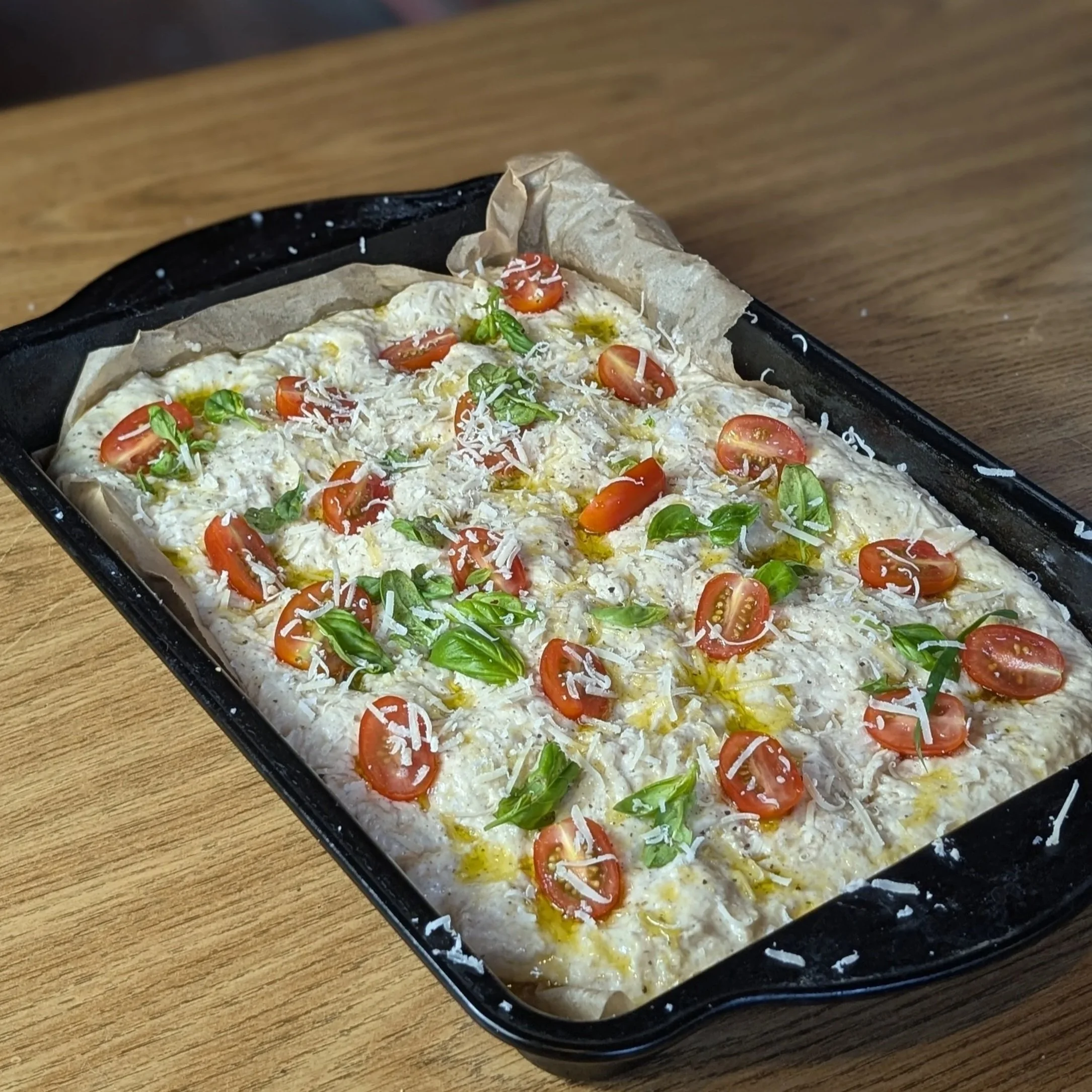
5. Line a baking tray with greaseproof paper, then grease the paper with a tablespoon of olive oil, transfer the dough to the tray and, with lightly oiled hands, gently press and spread it out so it fills the pan right to the edges and corners. Don’t worry about making it perfectly smooth as we will dimple it!
6. Lightly cover the pan with a damp tea towel to keep the dough from drying out, and let it proof in a warm spot until it’s doubled in size. When it’s ready, the dough should look plump & puffy.
7. While the focaccia is proofing, pre heat the oven to 220°C.
8. Once the dough has doubled, drizzle 2 tablespoons of olive oil over the surface. Using your fingers, dimple the dough all over, pressing down firmly to the bottom of the pan. The dough will deflate a little, and that’s perfectly fine. Gently press the tomatoes into the dough, spacing them evenly, then sprinkle over the basil, parm and flaky sea salt, then place the pan into the oven & bake for 40–45 minutes, until the focaccia is beautifully deep golden brown on top.
9. As soon as it comes out of the oven, carefully lift the focaccia out of the pan, remove the greaseproof, and place it on a wire rack to cool. Let it cool until just warm or completely at room temperature before slicing, as this gives the crumb time to set properly.
10. This focaccia is at its absolute best on the day it’s baked, but it keeps well in an airtight container until the next day. Before serving, reheat it in a 180°C oven for about 12 minutes to warm it through and bring back that lovely crisp crust.